
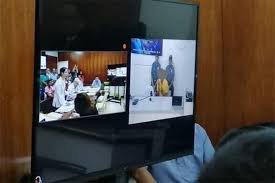
Navigating Philippine Courts Remotely: The Supreme Court’s Updated Videoconferencing Rules for Foreigners
For foreign investors, expatriates, or cross-border litigants, dealing with legal disputes in a foreign country can be a logistical nightmare. Traveling back and forth for brief court hearings wastes time, drains financial resources, and disrupts business operations.
Recognizing these challenges, the Supreme Court of the Philippines has officially updated and permanentized its rules on remote court appearances. Under A.M. No. 24-11-02-SC (effective February 16, 2026), the Philippine judiciary has modernized its virtual courtroom framework.
Whether you are an expat residing in the Philippines or a foreign litigant managing a case from abroad, here is a practical guide to what these updated rules mean for you.
1. Virtual Courtrooms: Fully Remote vs. Partially Remote Hearings
The Supreme Court has made it clear that remote hearings are no longer temporary pandemic measures; they are a standard fixture of Philippine practice. The rules define two types of setups:
- Fully Remote Videoconferencing: Every participant—the judge, lawyers, and litigants—joins from separate remote locations. No one is physically in the courtroom.
- Partially Remote Videoconferencing: At least one person is physically inside the courtroom (e.g., the judge or opposing counsel), while you or your witnesses participate via video link.
Important Note for Foreigners: Virtual hearings carry the exact same weight, dignity, and solemnity as an in-person trial. Proper court decorum, business attire, and a quiet, professional environment are strictly required when appearing on camera.
2. Testifying from Abroad: The “Overseas Venues” Rule
If you are currently outside the Philippines, you cannot simply log into a Philippine court hearing from your laptop at home or in a private office. The Supreme Court mandates strict rules for overseas testimonial evidence:
- Authorized Locations Only: To give testimony from abroad, you must do so from an authorized Overseas Venue. This typically means a Philippine Embassy, a Philippine Consulate, or another venue explicitly approved by the Supreme Court.
- Prior Arrangements: Your Philippine counsel must file a timely motion proving that prior arrangements have been made with the specific embassy or consulate to use their facilities.
- Time Zone Alignment: Virtual hearings from abroad must be scheduled during the standard working hours of the Philippine courts.
- Who Pays? The party requesting the remote overseas testimony must shoulder all associated costs and expenses.
3. Strict Rules on Technical Readiness
The Philippine courts will not tolerate delays caused by poor internet connections. When your lawyer files a motion requesting a virtual hearing, they must present proof of technical readiness.
- You must have a stable internet connection with a bandwidth of at least 4Mbps.
- You must be stationed in an appropriate physical environment.
- You must join the “virtual lobby” or waiting area at least 20 minutes before the scheduled hearing time.
4. Evidentiary Protocols and Anti-Coaching Controls
To preserve the absolute integrity of trials, the new guidelines introduce strict digital security and procedural controls:
- Virtual Inspections: At any point during your testimony, the judge can order you to pan your camera 360 degrees around the room to verify that you are completely alone and not being coached.
- Device Ban: The use of secondary cellphones, tablets, or unauthorized materials during your testimony is strictly prohibited to prevent electronic coaching.
- Document Presentation: All documentary and object evidence must be filed electronically beforehand. During the trial, documents will be shared and marked using screen-sharing functions or digital document cameras.
- Private Client-Lawyer Consultation: If you and your lawyer are in different locations, the court can grant you access to a private, secure virtual breakout room or allow a private phone line to consult during the trial (unless you are actively in the middle of testifying).
5. Security, Data Privacy, and Forbidden Recordings
Foreign litigants often worry about privacy and confidentiality in public or digital court spheres. The updated resolution addresses these concerns directly:
- Official Recordings Only: The court will record the entire proceeding for the official case archives. Litigants can apply for permission to view it, but court stenographers will still create official written transcripts.
- Unauthorized Recording is a Crime: It is strictly illegal for you, your team, or the public to record, screenshot, or rip any portion of the videoconference. Doing so constitutes contempt of court, carries severe legal penalties, and results in the permanent deletion of the unauthorized file.
- Data Privacy Consent: By participating, you give consent to the collection and secure processing of your sensitive personal data in full compliance with Philippine data privacy laws.
What Should Foreign Litigants Do Next?
If you currently have an ongoing civil, corporate, or criminal case in the Philippines—or foresee legal proceedings on the horizon—the ability to utilize remote hearings can save you massive amounts of travel time and expense.
Instruct your Philippine legal counsel to assess whether your upcoming hearings can be shifted to a fully or partially remote format. If you are abroad, ensure your legal team coordinates with the nearest Philippine Embassy or Consulate well in advance to secure an authorized virtual trial slot.
Frequently Asked Questions (FAQs)
Can I choose any video platform (like Zoom or Skype) for my hearing?
Generally, no. The court mandates the use of an official platform provided by the Supreme Court. The only exception is for small claims cases, where judges may authorize alternative, widely available applications if the official platform is inaccessible.
What happens if my internet connection drops mid-hearing?
If technical or technological issues disrupt the clarity, regularity, or fairness of the videoconference, the judge will suspend the proceedings. The court may pause to fix the issue or direct that the hearing be moved to an in-person setup if the issues cannot be resolved.
Can the court force me to testify via video from abroad?
No. The Supreme Court explicitly states that the court cannot compel any litigant or witness located overseas to testify via videoconference. Participating from an overseas venue must be initiated voluntarily through a motion filed by your own legal team.
Can the general public watch my virtual trial?
Yes, but under strict regulation. Individuals wishing to observe a virtual hearing must submit a formal request to the court’s official email at least two calendar days in advance, providing their full name, a government-issued ID, and their statement of interest. The court can deny public access to protect morality, decency, or the safety of vulnerable witnesses, such as children.
Can my lawyer and I use the chat function during the trial to talk?
To prevent witness coaching, the court has strict controls over digital communication. While you are allowed to consult your lawyer privately through secure breakout rooms or private phone lines, the court may restrict or disable the platform’s chat function exclusively for the judge and court staff to preserve the integrity of the trial.